
CO₂-negative - Africa Energy Access & Clean Power Program
2026–2030
Modular 1 MW CRYOCCS® power hubs to replace diesel generators and bring reliable, affordable and low-carbon electricity to African communities, towns and industrial sites. Each hub combines firm power, cryogenic CO₂ capture and cold/heat for local use – enabling both economic growth and humanitarian impact.
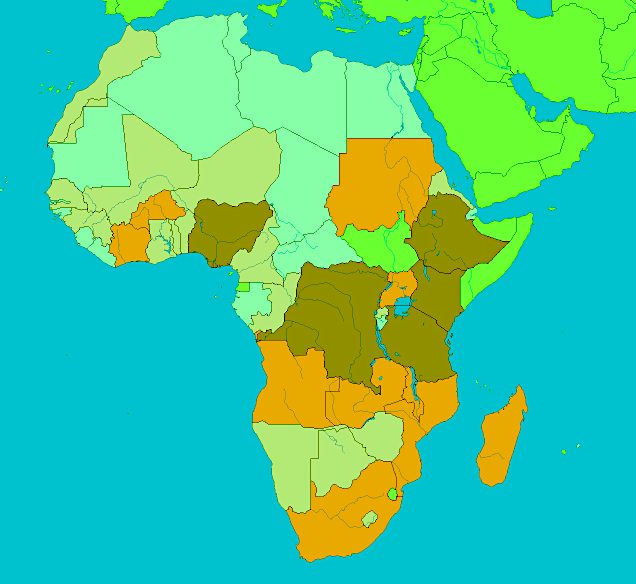
Why Africa – Energy Access & Diesel Replacement
Across Africa hundreds of millions of people and businesses rely on unstable grids or expensive diesel generators. CRYOCCS® hubs provide reliable, cleaner and cheaper power for communities, health care, water, telecom and small industry – while capturing CO₂ and enabling climate-finance backed investment.
Energy access gap today
- Frequent blackouts and weak grids in many cities and towns.
- Villages and remote areas rely on diesel gensets or have no power at all.
- Public services – hospitals, schools, water pumps – lack stable electricity.
- Diesel power can cost 0.30–1.00 €/kWh and emits high CO₂ and pollutants.
Replacing diesel with CRYOCCS hubs can cut fuel costs, emissions and noise, while creating local jobs in operation and maintenance.
How CRYOCCS hubs work in Africa
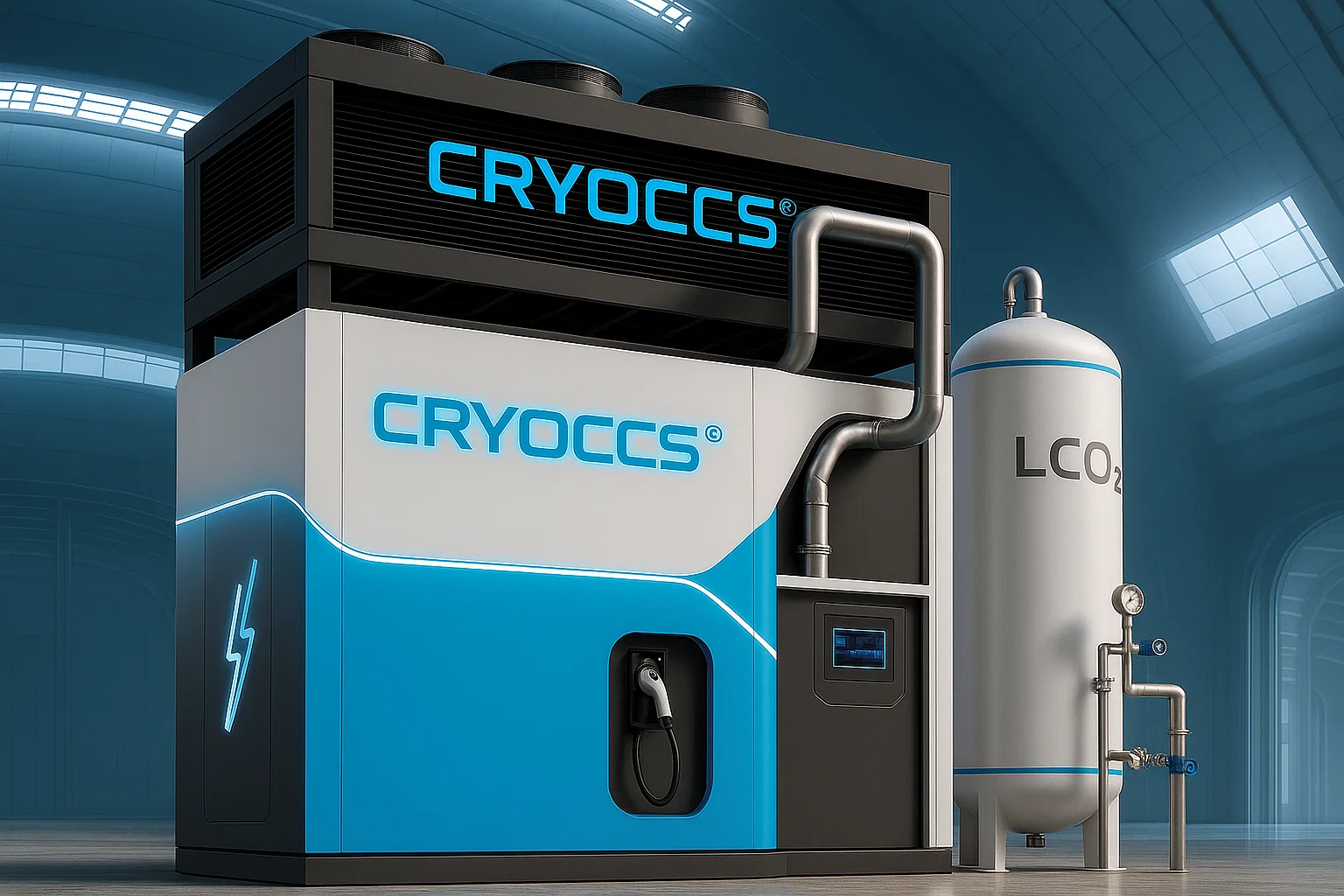
- 1 MW natural gas or pipeline-quality gas engine with integrated cryogenic CO₂ capture.
- Power for mini-grids (villages, districts) or behind-the-meter for critical loads.
- Cold and heat can support food storage, cooling, water treatment or air-conditioning.
- Modular concept: start with 1 hub and scale up as demand grows.
Each hub can serve 2,000–5,000 households equivalent, depending on the local load mix.
Economic Model – Affordable Power with Climate Finance
The Africa Program adapts the proven 1 MW CRYOCCS® hub economics to mini-grids and captive power for social infrastructure. Revenues combine electricity sales, optional liquid CO₂ use and the value of avoided diesel and CO₂ emissions.
1. Electricity for mini-grids & critical loads
Villages, towns, clinics, water, telecom, light industry- Gross generation: ≈ 8,000 MWh/year per 1 MW hub.
- Tariff examples: 0.12–0.22 €/kWh depending on country and support schemes.
- Hybrid operation with solar or wind to reduce fuel use where available.
→ Target: reliable, 24/7 power at much lower cost than diesel, with transparent tariffs for communities and local businesses.
2. Climate finance & CO₂ value
Replacing diesel and capturing CO₂- Each hub can avoid or capture ≈ 1,000 t CO₂/year.
- Potential access to carbon markets, climate funds and concessional finance.
- Additional support from development banks and impact investors.
→ CO₂ value and grants reduce the effective cost of capital and electricity price.
3. Optional LCO₂ and cold chain
For agriculture, food & beverage and cooling- Where demand exists, captured CO₂ can be sold as liquid CO₂ for local industry.
- Cold from the cryogenic process can support cold chains (food, vaccines).
- Improved food security and reduced losses along the value chain.
→ Additional revenue and social impact in regions with emerging cold-chain markets.
Illustrative 1 MW base case
| Item | Illustrative value |
|---|---|
| Annual power sales | ≈ 0.9–1.4 M€/year |
| Additional CO₂ / climate value | up to 0.10–0.20 M€/year |
| Target LCOE to end-users | ≈ 0.10–0.22 €/kWh |
Exact values depend on fuel, country, tariffs and available climate-finance instruments. Detailed financial models are available under NDA.
Pilot & Scale-Up – From 5 Countries to ≥ 500 Hubs
The Africa 2030 Program starts with 5 pilot countries and scales to at least 500 hubs by 2030. The pilots de-risk technology, regulation and partnership structures and create reference sites for further roll-out across the continent.
Pilot phase – 5 countries
| Typical pilot package | |
|---|---|
| Countries | 5 priority countries / regions |
| Hubs per country | 2–4 (mini-grids & critical loads) |
| Total capacity | ≈ 5–10 MW |
| Key sectors | health, water, telecom, small industry |
Pilots are co-designed with governments, utilities, development partners and local private operators.
Scale-up – ≥ 500 hubs to 2030
| Program vision | |
|---|---|
| Total hubs | ≥ 500 × 1 MW |
| Total capacity | ≥ 500 MW distributed |
| Annual CO₂ impact | > 500,000 t CO₂/year |
| People reached | > 2 million equivalent |
The program can be structured as a portfolio for infrastructure and impact investors, blending commercial and concessional capital.
Investor & impact view
The Africa Program combines infrastructure-style cashflows with measurable social and climate impact: replacing diesel, expanding energy access and capturing CO₂. This makes CRYOCCS® hubs suitable for blended finance structures involving development banks, climate funds, philanthropic capital and commercial investors.
Working with Governments & Development Partners
The Africa 2030 Program is designed as a cooperation platform for governments, utilities, rural electrification agencies, local operators and international partners.
Roles for African partners
- Identify priority regions and sites (health, water, telecom, mini-grids).
- Provide permits, land and connection to local grids where needed.
- Host projects in PPP structures with local or regional operators.
- Integrate CRYOCCS hubs into national electrification strategies.
→ Hubs can be lighthouse projects for modern, low-carbon energy access.
International & development partners
- Development banks and climate funds to co-finance CAPEX.
- NGOs and agencies to align with SDG7 (energy) and SDG13 (climate).
- Impact investors for portfolio-level investments.
- Technical-assistance programs for capacity building and training.
→ The program combines humanitarian benefits with bankable infrastructure.
Next Steps – Building the Africa 2030 Program
This page is a compact briefing for African decision-makers, investors and development partners. A detailed technical and financial dossier – including country-specific concepts and pilot proposals – can be shared under NDA.
Governments, utilities, rural electrification agencies, development banks and impact investors are invited to contact us via our main contact form and mention “CRYOCCS Africa Program 2026–2030” in the subject line.