
CO₂-negative
China Pilot & Scale-up Program
2026–2030
A multi-site program to decarbonise key industrial and port clusters in China using modular 1 MW natural gas power hubs with integrated CRYOCCS cryogenic CO₂ capture. The concept combines firm low-carbon power, deep emission reductions and three revenue streams – electricity, liquid CO₂ and CO₂ certificates – and is designed for cooperation with state-owned utilities and regional governments.
Why China – Strategic Rationale
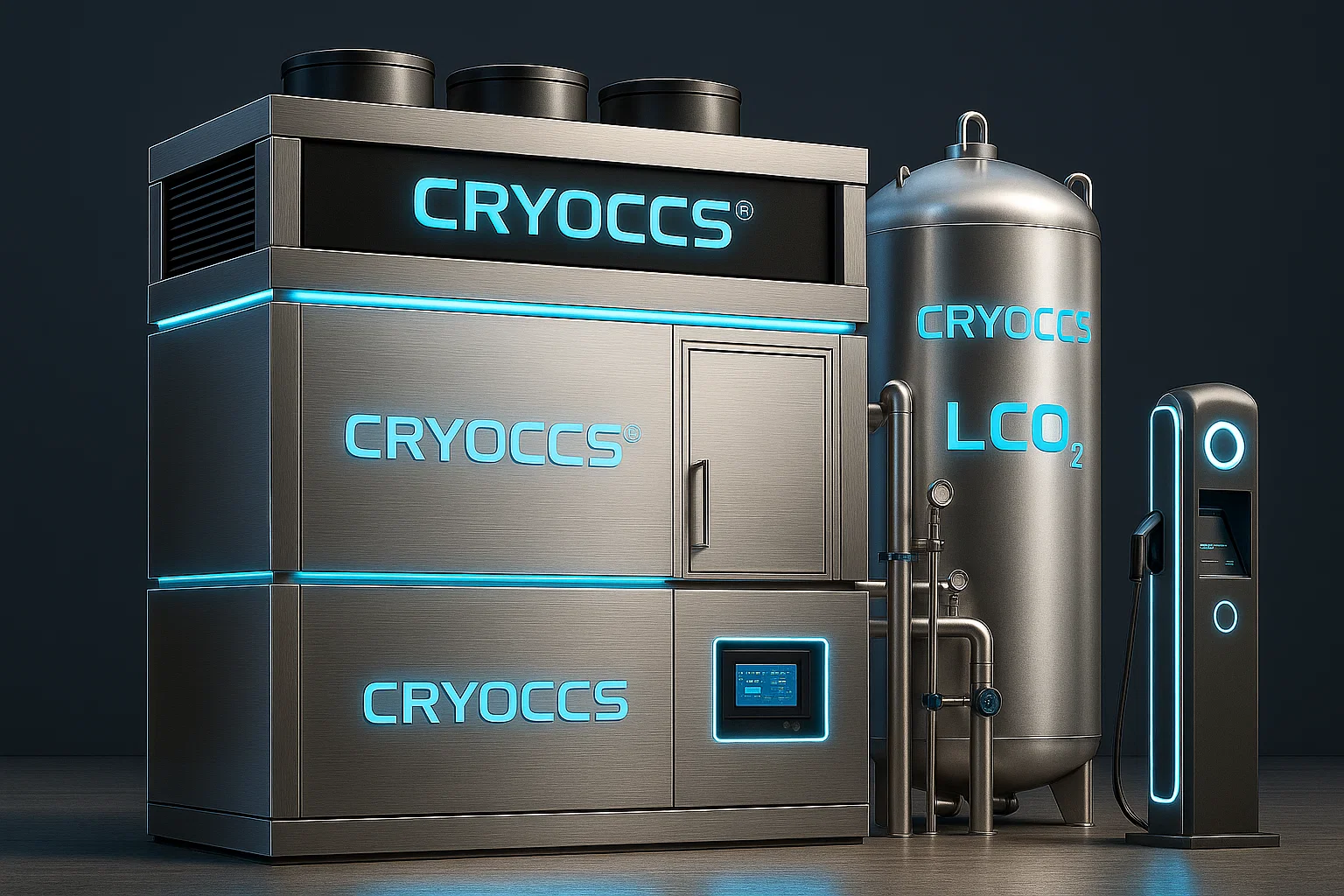
China is simultaneously expanding power supply, stabilising grids and reducing emissions. Modular CRYOCCS® hubs can support these goals by providing firm low-carbon power in industrial and port clusters while turning CO₂ from a cost factor into an economic asset.
Five pilot regions (Phase 1)
- Bohai Bay / Tianjin: port logistics, chemical and steel industry.
- Yangtze River Delta: industrial parks and data-centre clusters.
- Guangdong–Hong Kong–Macao Greater Bay Area: ports and technology hubs.
- Sichuan / Chongqing: inland industrial clusters and weak-grid areas.
- Inner Mongolia / energy bases: hybrid operation with renewables and hydrogen.
Each 1 MW hub can replace diesel generators or inefficient small boilers and act as an anchor load for local CO₂ offtake.
Role of government & state-owned partners
- Integrate CRYOCCS hubs as firm, low-carbon capacity in regional power planning.
- Demonstrate large-scale CO₂ capture for distributed assets (engines, turbines).
- Use hubs as reference projects in green industrial parks and port decarbonisation plans.
- Structure joint ventures or PPP models with national and provincial entities.
The program is designed as a cooperation platform for utilities, industrial players and local governments.
Three Revenue Streams per 1 MW Hub
Each 1 MW natural gas + CRYOCCS hub combines three income sources: electricity sales, liquid CO₂ sales and the value of avoided or monetised CO₂ certificates. Values below are based on the existing 1 MW base case and can be adapted to Chinese gas, power and carbon prices.
1. Electricity sales
Industrial power, port supply, backup and peak-shaving- Gross generation: ≈ 8,000 MWh/year.
- Net after capture power use: ≈ 6,800 MWh/year.
- Tariff structure: PPA with industrial clients or grid (example ~0.18 €/kWh equivalent).
→ Electricity revenue per hub: ≈ 1.224 M€/year (illustrative).
2. Liquid CO₂ (LCO₂) sales
Industrial, food & beverage, greenhouse and cooling users- Captured: ≈ 1,000 t CO₂/year per 1 MW hub.
- Use cases: beverages, cold chains, greenhouses, industrial processes.
- Contracting: long-term offtake with local industry or gas suppliers.
→ LCO₂ revenue: ≈ 0.200 M€/year per hub (example at 200 €/t).
3. CO₂ certificates / carbon value
CO₂ as an asset, not a penalty- Cost avoidance versus conventional gas or coal power.
- Integration with Chinese carbon markets and regional schemes.
- Illustrative value: ~80 €/t for 1,000 t CO₂ captured per hub.
→ Additional value: ≈ 0.080 M€/year per hub in avoided or monetised CO₂.
Combined economics (1 MW base case)
| Source | Annual revenue |
|---|---|
| Electricity | ≈ 1.224 M€/year |
| LCO₂ sales | ≈ 0.200 M€/year |
| CO₂ value | ≈ 0.080 M€/year |
| Total revenues | ≈ 1.504 M€/year |
Effective levelised cost of electricity (LCOE) can enter the 0.04–0.07 €/kWh range, depending on local fuels, tariffs and support instruments.
Pilot & Program Financials – From 5 Projects to ≥ 500 Units
The China program reuses the proven 1 MW CRYOCCS® hub economics and scales them to at least 500 modular units by 2030. Pilot projects de-risk technology, regulation and local partnerships before a broad roll-out in multiple provinces.
Single 1 MW pilot hub (illustrative)
| Revenues & OPEX | |
|---|---|
| Total revenues (power + LCO₂ + CO₂) | ≈ 1.504 M€/year |
| OPEX (fuel, O&M, LN₂, staff) | ≈ 0.910 M€/year |
| Net profit (EBITDA approx.) | ≈ 0.594 M€/year |
| CAPEX & returns | |
|---|---|
| Pilot CAPEX (1 MW hub) | ≈ 1.55 M€ |
| Simple payback | ≈ 2.6 years |
| Indicative IRR (10y) | ≈ 29–33 % |
With local incentives, concessional finance or grants, equity payback can be shorter.
Program scale – ≥ 500 MW across China
| Illustrative cluster (500 × 1 MW) | |
|---|---|
| Total revenues | ≈ 752 M€/year |
| Estimated OPEX | ≈ 455 M€/year (with scale effects) |
| Net profit | ≈ 297 M€/year |
| Estimated CAPEX | ≈ 775 M€ |
| Simple payback | ≈ 2.6 years (illustrative) |
At ≥ 500 units, CRYOCCS hubs become a long-term decarbonisation platform for Chinese industrial and port clusters, with strong potential for local manufacturing.
Investor view
The program offers modular infrastructure with high EBITDA margins and multiple revenue streams. Individual hubs can be financed as project SPVs, while large investors can participate at portfolio level across regions and use cases.
For institutional, infrastructure and impact investors, the combination of stable power cashflows and CO₂-linked upside is particularly attractive.
Collaboration with Government & State-Owned Enterprises
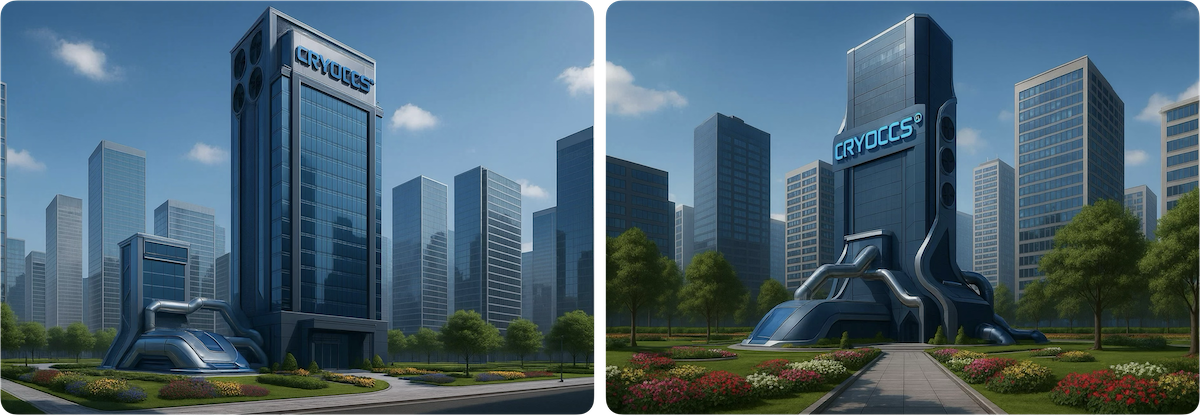
The China program is conceived as a cooperation model with national and provincial stakeholders – not as a competing generation asset. CRYOCCS hubs can be integrated into existing planning and investment frameworks.
Possible roles for public partners
- Identify pilot sites in industrial parks, ports and energy bases.
- Provide connection to gas supply, power grid and local CO₂ offtakers.
- Host pilot hubs in joint ventures with state-owned utilities or park developers.
- Support permitting, land use and data sharing.
→ Pilot projects become visible reference sites for clean industrial growth.
Benefits for policy objectives
- Support dual goals of emission peaking before 2030 and long-term neutrality.
- Enable clean, reliable power in fast-growing industrial clusters.
- Create local value chains for CO₂ logistics, storage and utilisation.
- Open opportunities for technology transfer and local equipment manufacturing.
→ CRYOCCS hubs can be embedded in existing green-development and industrial upgrade programs.
Next Steps – Dialogue with Investors & Authorities
This page is designed as a compact briefing for Chinese decision-makers and international investors. A detailed technical and financial dossier – including site concepts for the 5 pilot projects and a roadmap to ≥ 500 units by 2030 – can be shared under NDA.
For investors, utilities, port authorities or industrial-park developers: please use our main contact form and mention “China CRYOCCS Program 2026–2030 – 5 pilots / 500 units” in the subject line.