
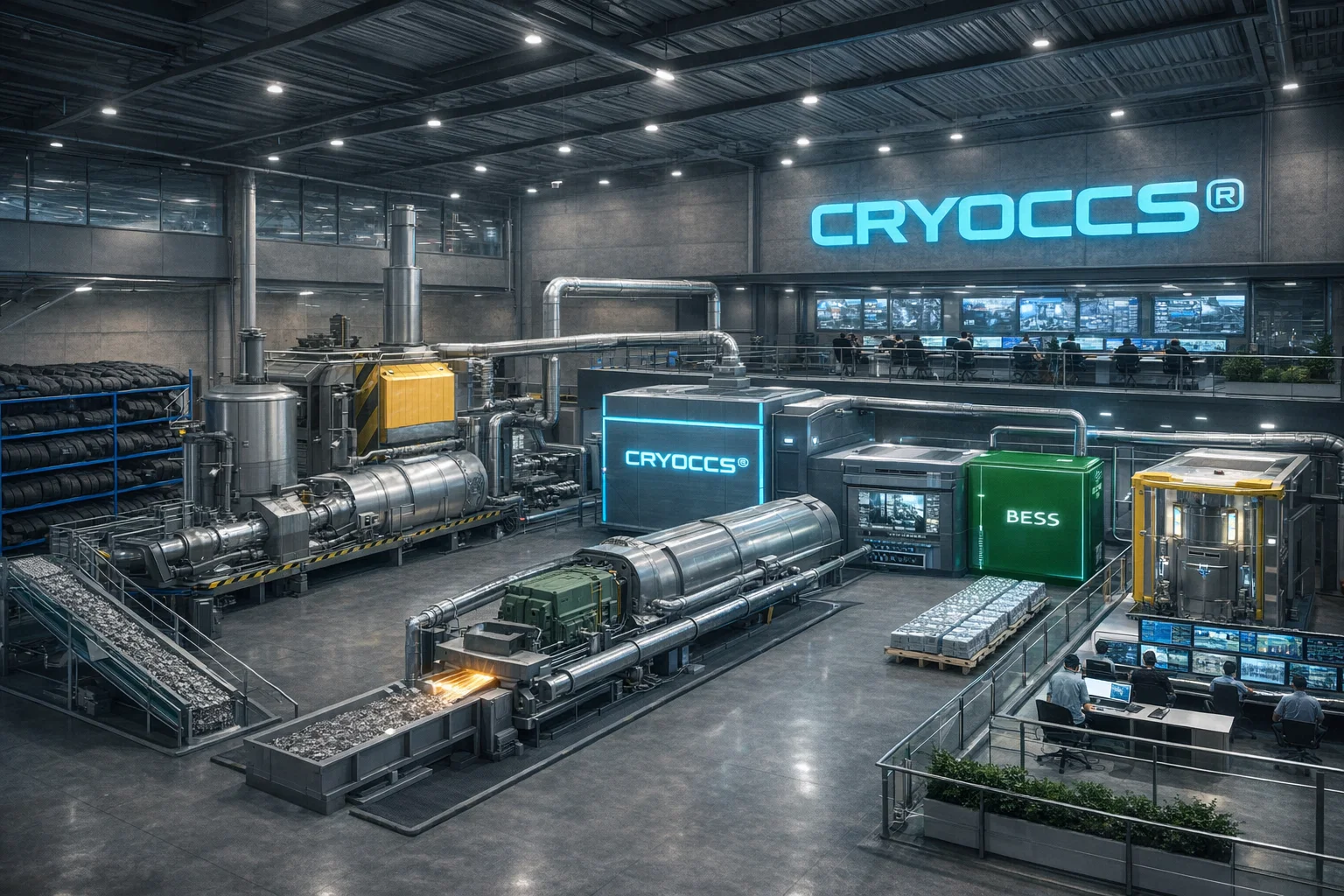
We transform waste streams, such as end-of-life tires and aluminum scrap, into high-value industrial products. Through an integrated process of pyrolysis, power generation, CO₂ capture, and advanced material conversion, we produce Carbon Black, industrial-grade diamonds for tooling, and high-purity aluminum for aerospace applications.
The system generates stable cash flows by leveraging negative-cost feedstocks, efficiently utilizing energy and CO₂, and producing multiple revenue streams. Industrial diamonds provide significant upside due to their high value, while the business model is modular, scalable, and capable of delivering net grid services via energy storage.
This is a true industrial circular economy, combining sustainability with high-margin, bankable operations.
Globally, tire landfills are growing uncontrollably. Europe: 3,6 Millionen ton / Year. Only in Kuwait alone more than 43 million end-of-life tires (387.000 ton) are stockpiled. At the same time, energy prices, CO₂ costs, and regulatory pressure on industry and infrastructure continue to rise.
Today, these challenges are addressed in isolation — expensive, inefficient, and without scalability.
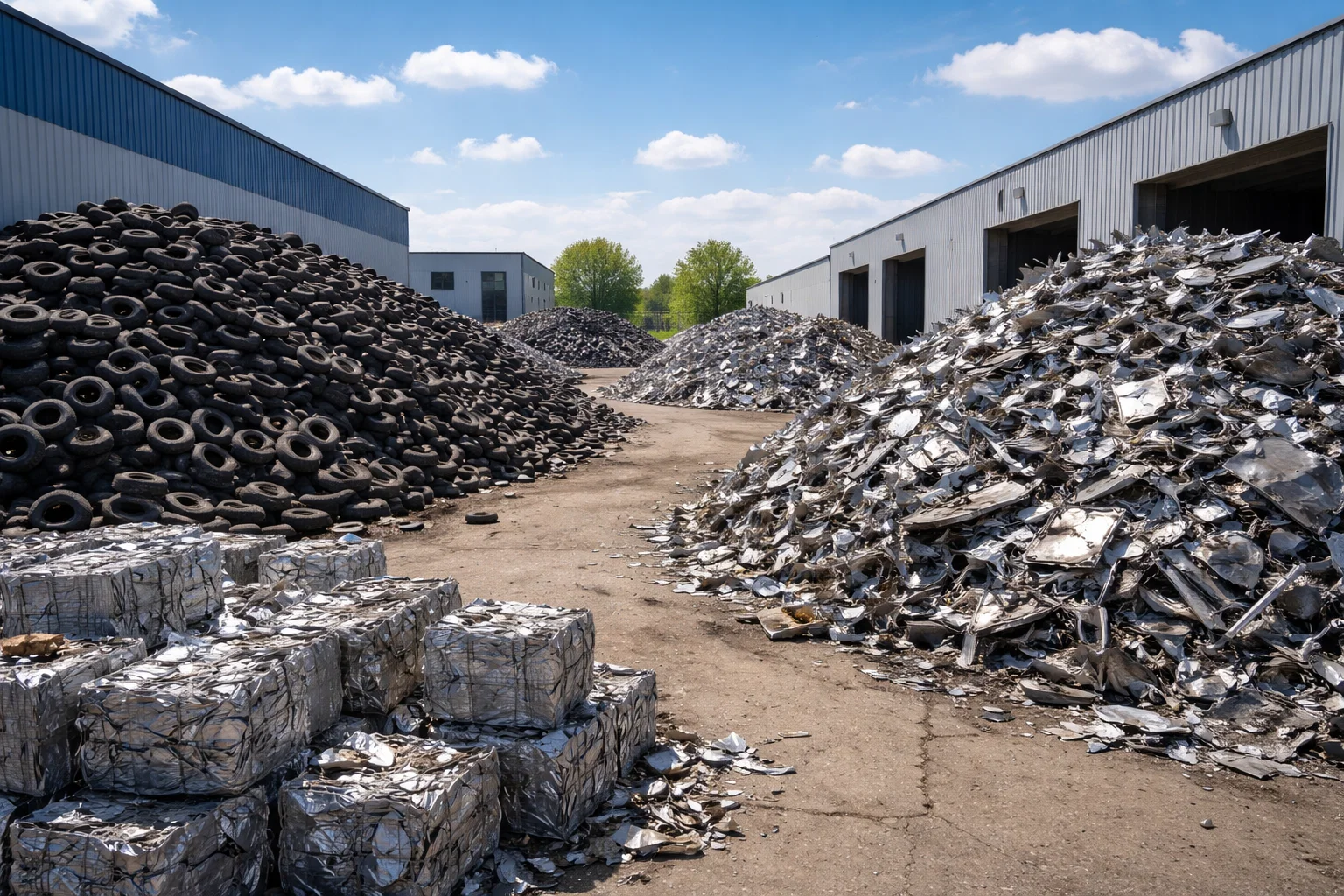
12,000 t/year end-of-life tires → pyrolysis oil, gas, carbon black, steel
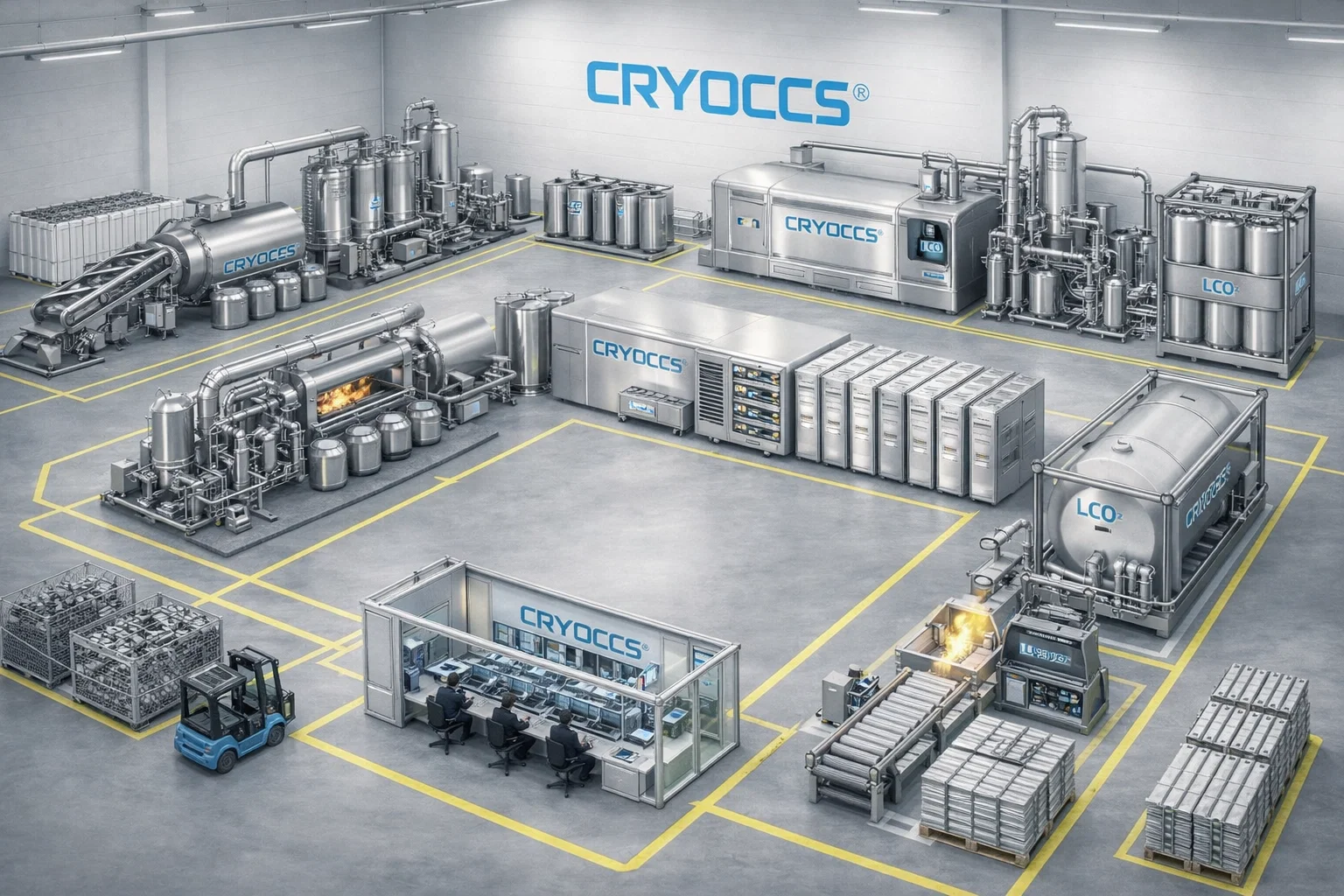
4 × 1 MW generators powered by pyrolysis oil + waste heat recovery (Stirling engines & turbines)
PSA separation + liquefaction → sale as LCO₂ or use for e-fuels
Aluminum scrap → 99.99% purity (aerospace grade)
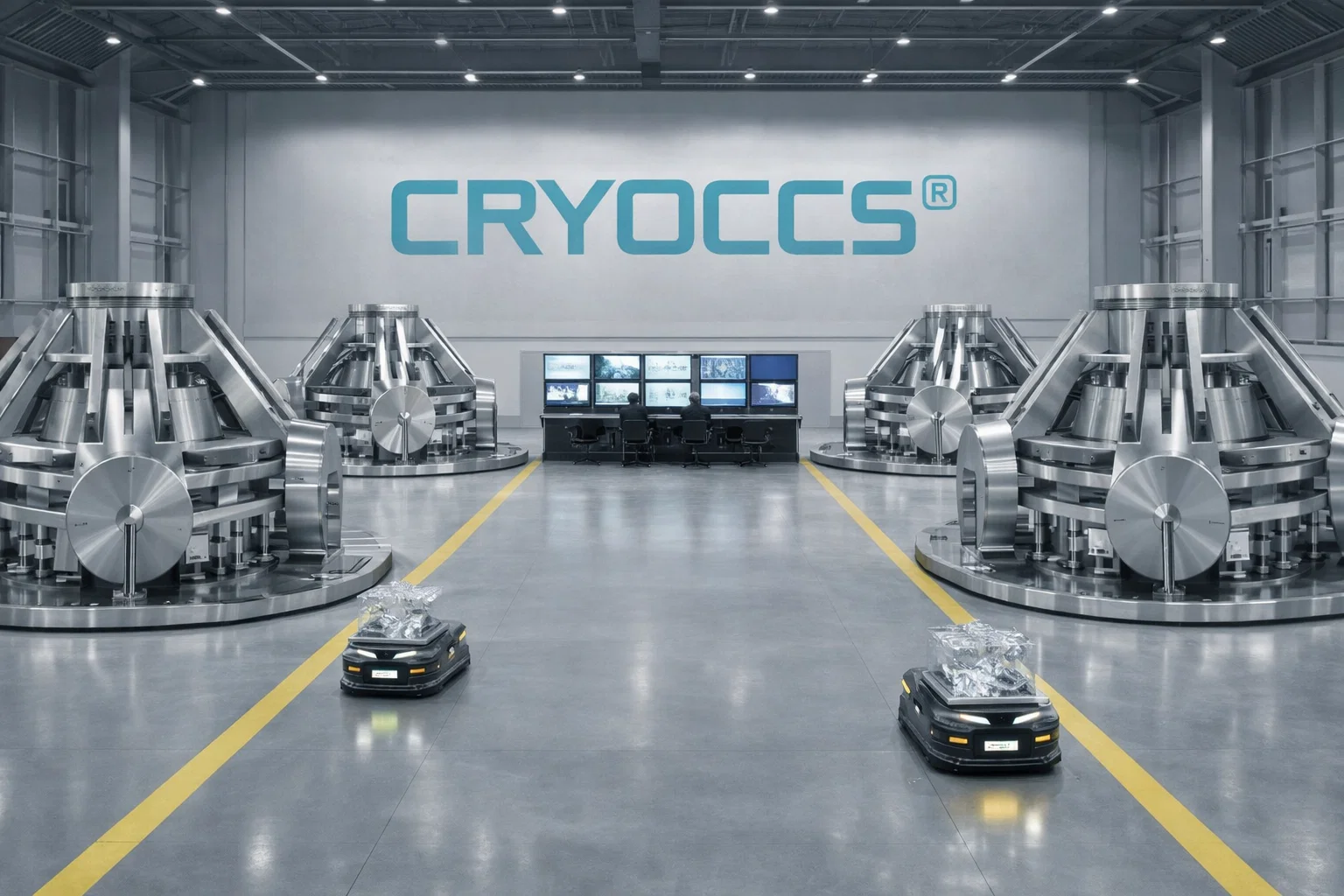
12,000 t tires/year
Gate fee: €160/t
~28 GWh electricity/year
+4–5 GWh from waste heat
~14,000 t CO₂ captured/year
≈ 14,000 certificates/year
20 MWh storage
Grid stabilization & energy arbitrage
Total investment: €45–49 million
~€3.8–4.5 million/year
~€7–9 million/year
14–18% unlevered
18–24% levered
The CRYOCCS® system is modular and fully replicable:
Converting a Diesel Generator to Pyrolysis Oil
Diesel generators are robust power sources that typically run on conventional diesel fuel. With rising fuel costs and increasing interest in sustainable energy, the use of alternative fuels such as pyrolysis oil is becoming more attractive. Pyrolysis oil is produced through the thermal decomposition of organic materials in the absence of oxygen and provides a renewable liquid energy source that can partially replace diesel.
Converting a diesel generator to run on pyrolysis oil requires careful modification of the fuel system and injection technology, as pyrolysis oil has higher viscosity, different ignition and combustion characteristics, and more impurities compared to conventional diesel. Typical adjustments include:
With these modifications, a diesel generator can operate reliably on pyrolysis oil. Efficiency and longevity, however, depend heavily on fuel quality and careful adaptation. Using alternative fuels like pyrolysis oil not only offers economic benefits but also contributes to reducing reliance on fossil fuels.
Our thanks go to:

Interested in partnership, test facilities, or licensing? Send us a message – we'll get back to you quickly.